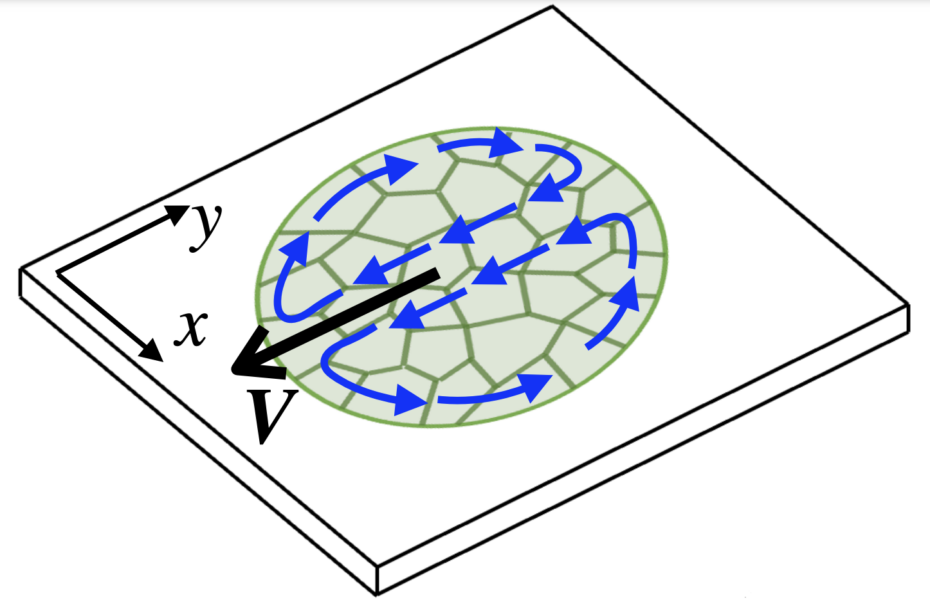
Mechanisms enabling efficient fountain-flow supracellular migration
Jordi Font-Reverter, Alejandro Torres-Sánchez, Guillermo Vilanova, Marino Arroyo arXiv 2403.11969 (2024).
Jordi Font-Reverter, Alejandro Torres-Sánchez, Guillermo Vilanova, Marino Arroyo arXiv 2403.11969 (2024).
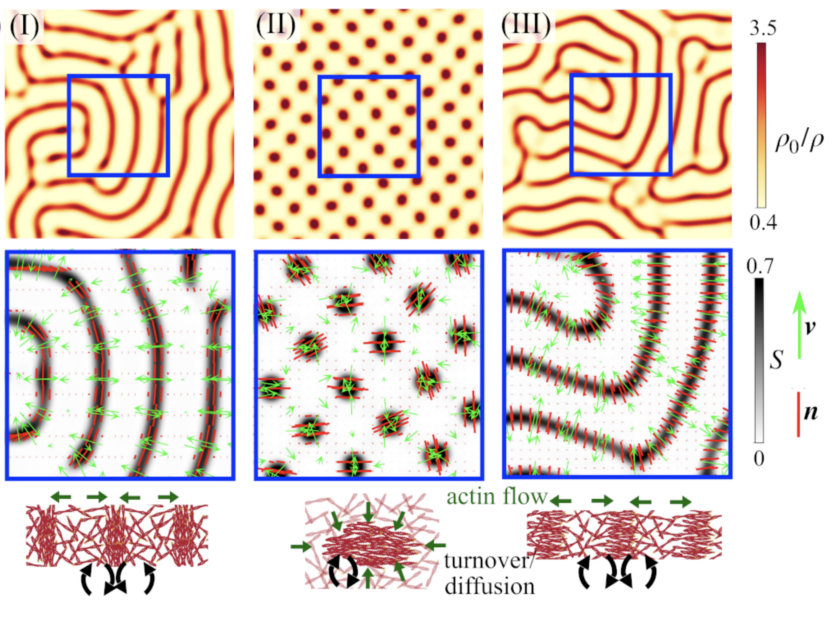
Waleed Mirza, Marco De Corato, Marco Pensalfini, Guillermo Vilanova, Alejandro Torres-Sánchez, Marino Arroyo. eLife 13:RP93097 (2024).
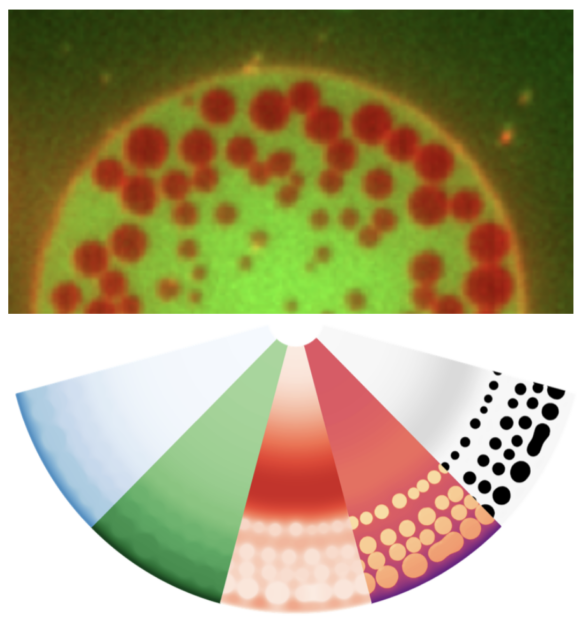
Céline Dinet, Alejandro Torres-Sánchez, Roberta Lanfranco, Lorenzo Di Michele, Marino Arroyo, Margarita Staykova. Nature Communications 14, 7445 (2023).
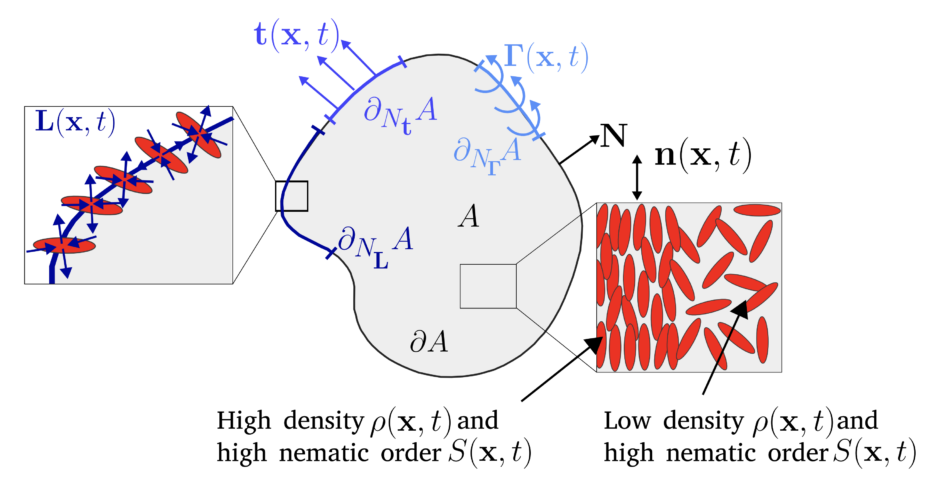
Waleed Mirza, Alejandro Torres-Sánchez, Guillermo Vilanova, Marino Arroyo. arXiv (2023).
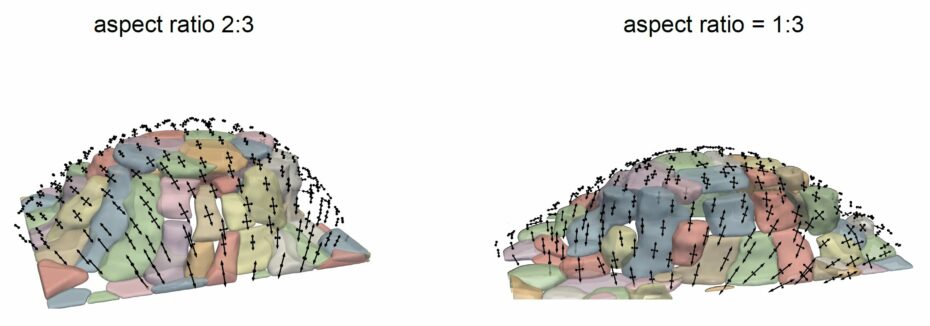
Ariadna Marín-Llauradó, Sohan Kale, Adam Ouzeri, Raimon Sunyer, Alejandro Torres-Sánchez, Ernest Latorre, Manuel Gómez-González, Pere Roca-Cusachs, Marino Arroyo, Xavier Trepat. Nature Communications 14, 4014 (2022).
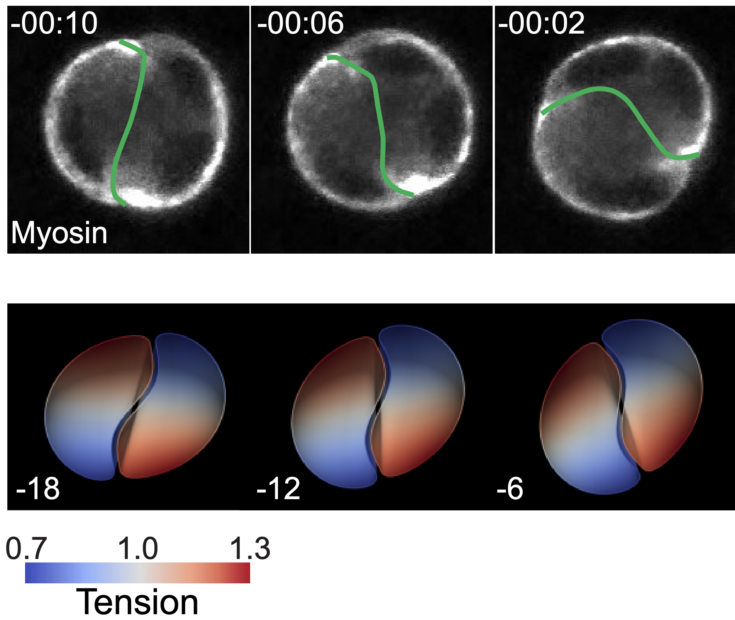
Linjie Lu , Tristan Guyomar, Quentin Vagne, Rémi Berthoz, Alejandro Torres-Sánchez, Michèle Lieb, Cecilie Martin-Lemaitre, Kobus van Unen, Alf Honigmann, Olivier Pertz, Guillaume Salbreux, Daniel Riveline bioRxiv (2022).
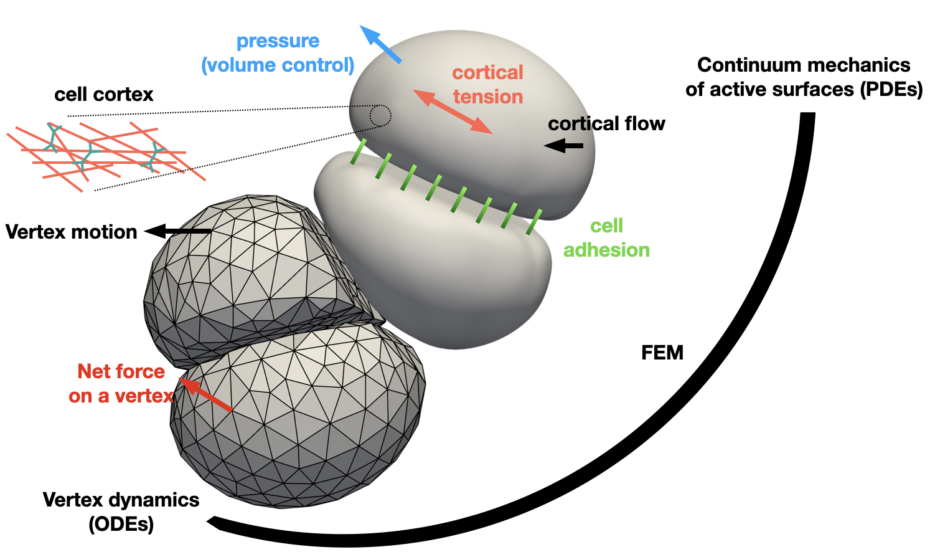
Alejandro Torres-Sánchez, Max Kerr Winter, Guillaume Salbreux. PLoS Comput Biol 18(12): e1010762.
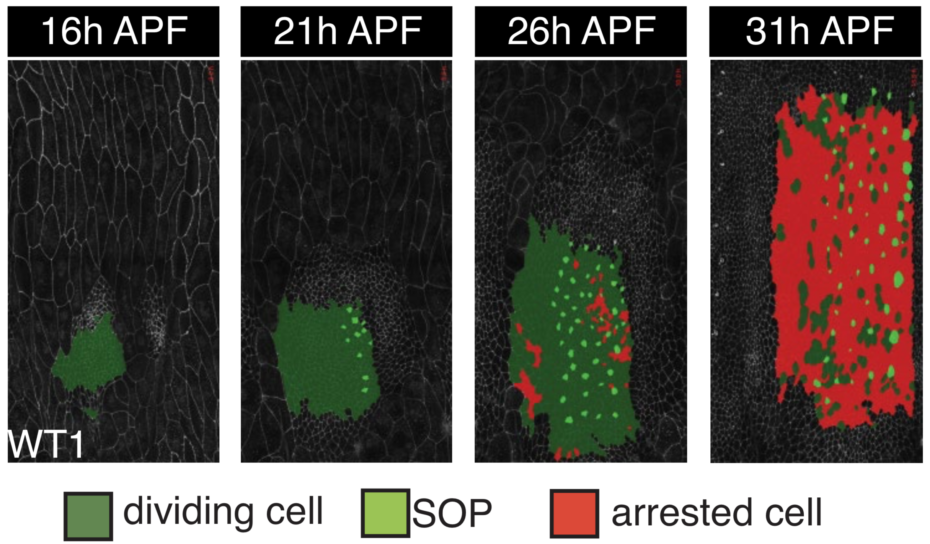
Anna P Ainslie, John Robert Davis, John J Williamson, Ana Ferreira, Alejandro Torres-Sánchez, Andreas Hoppe, Federica Mangione, Matthew B Smith, Enrique Martin-Blanco, Guillaume Salbreux, Nicolas Tapon. Current Biology (2022).
In this talk we discuss a multidisciplinary project involving novel organoid models of mammary gland cancer, light sheet microscopy, automatic segmentation, and mathematical modelling. The project is a collaboration between the Behrens group (organoid models), the Dunsby group (light sheet microscopy), and the Salbreux group (segmentation and theoretical modelling). This… Read More »Our talk on the mechanics of organoids: from organoid models to advance microscopy to cell segmentation to theoretical modelling!
Alejandro Torres-Sánchez, Max Kerr Winter, Guillaume Salbreux. Cells & Development, 203724 (2021)